 Cáo Moments
Home › Blog › Marriage proposal planning
Wedding Proposal in Vietnam for Japanese Couples: Cáo Moments Guide
By the Cáo Moments team · 2026-11-04
A wedding proposal in Vietnam is a moment that demands both romance and logistics. Japanese couples often bring a preference for precision, minimalist aesthetics, and respect for local culture—values we've learned to honor in every detail. From the initial WhatsApp message through the final edited video delivery, we treat your proposal as a full orchestrated experience, not a rented venue with a cake. Here's how we plan, what you decide, and where rain or timing can shift things.
Why do Japanese couples choose Vietnam for a proposal?
Japan is intimate, expensive, and often crowded. Vietnam offers dramatic natural backdrops—limestone karst, colonial architecture, rice terraces, beaches—at a scale that feels cinematic without feeling staged. Japanese couples also value the cultural exchange: the chance to propose in a setting that will matter to your partner's life story, and to involve local craftsmanship (flowers from local growers, a cake made that morning, a videographer who knows how light moves in Hanoi humidity). The cost-to-experience ratio is far higher than Tokyo or Kyoto. Most Japanese couples we work with come during November–February (cool, dry) or September–October (fewer tourists, still warm).
Chat with a planner on WhatsApp

How do we keep the proposal a secret across time zones?
The risk is highest when both partners have email, shared phones, or family group chats. We ask the proposing partner to register with us alone and set up a WhatsApp chat that excludes their partner. All planning—venue photos, cake designs, flower references, timeline adjustments—happens there only. We never send documents via email, never use shared scheduling apps, and never ask the partner's family or friends to coordinate arrival. If the partner is based in Vietnam and the proposer is in Japan, the proposer typically arrives 2–3 days early to finalize details in person and brief local vendors. If both are in Japan, we coordinate by video call with the proposer, then transition to rapid-response WhatsApp once the couple lands in Vietnam. We also ask: who has access to the hotel room? Who will collect flowers without suspicion? Can we send decor to the venue directly? These conversations happen privately, in writing, with a timeline we both confirm.
What's the actual timeline on proposal day?
Let's walk through a real example: rooftop sunset proposal in Hanoi.
- 14:00: We (the setup team) arrive at the venue, check power for lighting, test the sound system, confirm table placement and sightline to the city view.
- 15:00: Florist delivers the arrangement; we position it so it's visible but won't block the first moment of the proposal.
- 15:30: Cake arrives in a thermal box; we place it on a side table with small plates, forks, champagne, and glasses chilled.
- 15:45: Photographer and videographer do a final walk-through, test angles, identify where the proposer and partner will likely stand.
- 16:15: Proposer and partner are en route. Photographer moves to a discreet vantage point. We dim lights to a warm level (not dark—we want to see faces).
- 16:30: Couple arrives. We greet them casually (if the partner doesn't know about us, the proposer has framed this as a "special dinner reservation"). Photographer is now in position, camera rolling silently.
- 16:32–16:45: The proposal happens. We stay out of sight but within earshot in case decor falls or audio cuts.
- 16:46: Immediately after yes, we emerge with champagne, flowers, and cake. Music begins (either a curated playlist or a live musician, depending on the design).
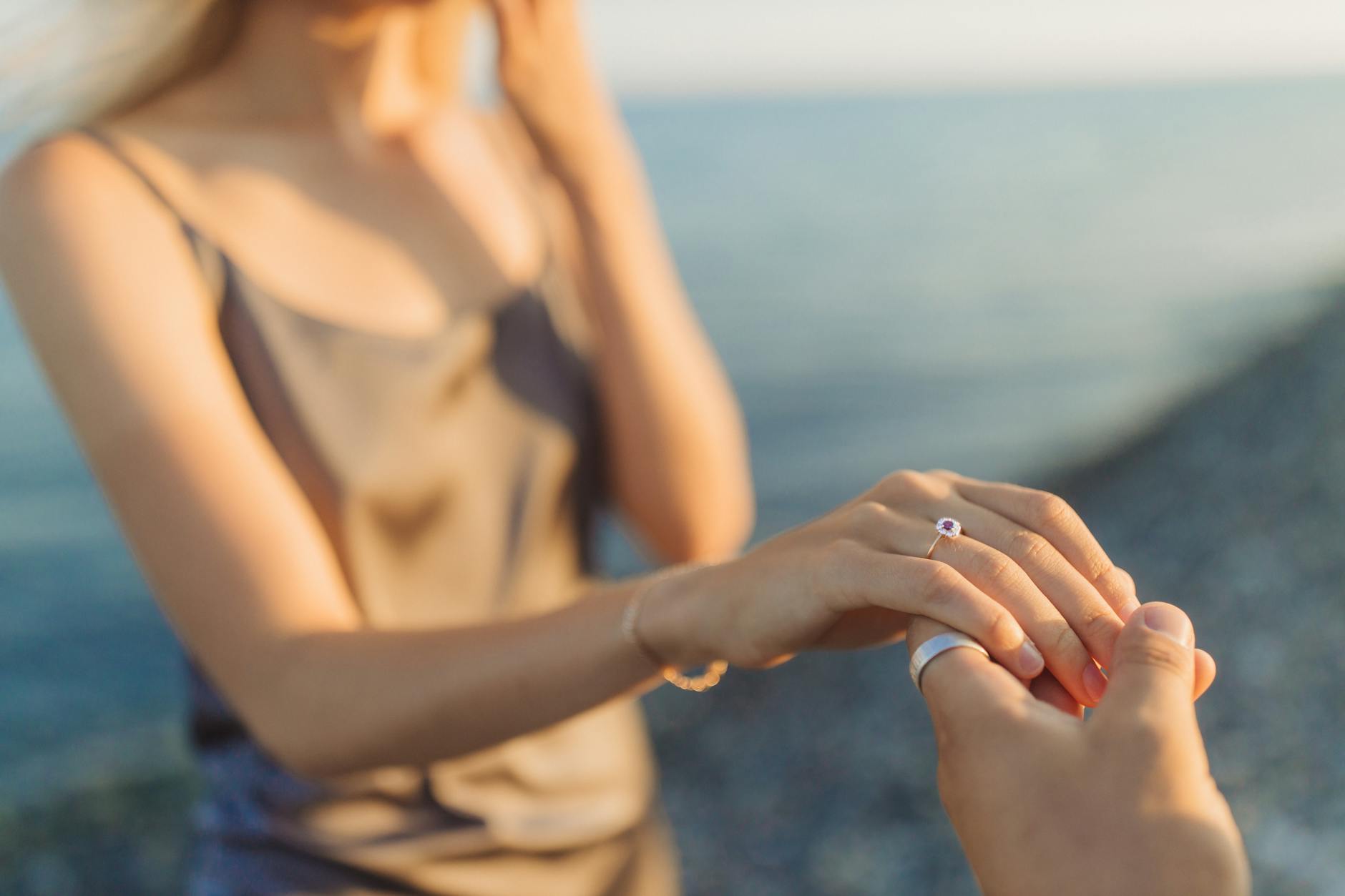
- 16:50–18:30: Couple eats cake, opens champagne, looks at flowers. Photographer captures candid moments—the ring on her hand, their faces, the city lights shifting as the sun sets.
- 18:30: We begin pack-down of rentals. Couple can linger or transition to a private romantic dinner setup if that's part of the plan.
Weather reshapes this: if rain is forecast for 16:30, we have either a covered rooftop section or a boutique hotel suite booked as a backup, and we notify the proposer by 12:00 so they can decide. Timing also shifts if the proposer's flight is delayed or the partner wants a later start—we're flexible on the day, but we confirm the final call time by 11:00 AM.
How do flowers and cake design work across cultural preferences?
Japanese aesthetics often lean toward asymmetry, negative space, and seasonal restraint. A Japanese partner might prefer a low, wide arrangement of white roses and spray roses with eucalyptus—no filler, no pomp—rather than a towering cascade. We listen for these cues in initial conversation and ask: do you want the flowers to feel more Vietnamese (rich color, abundant greenery, tropical blooms) or more Japanese (spare, structured, muted palette)? Same with cake. A standard Vietnamese multi-layer buttercream cake can read as heavy. Japanese preferences often include matcha, yuzu, or a delicate sponge cake with fresh fruit and minimal frosting. We source ingredients and designs from local bakers who've worked with international couples, and we provide photo references of what you're imagining. The cake is always made fresh that day—never frozen or ordered weeks in advance—so it arrives at the venue within 4 hours of the proposal time. If dietary needs apply (vegetarian, allergy, gluten-free), we confirm with the baker two weeks ahead and do a tasting call if the proposer is still in Japan.
For flowers, we work with growers and arrangers who understand both styles. Cost varies by season and rarity, but a custom arrangement that reflects your partner's preferences is worth the conversation—it's one of the few elements they'll hold in their hands immediately after yes.
What do we coordinate with your accommodation, and when do logistics fall apart?
Most proposals involve a hotel stay. We ask: which hotel? Do you want us to coordinate directly with their concierge? Can we leave decor in a back room the morning of? Who collects the flowers if they're delivered to the lobby? These details matter because hotel staff sometimes talk, or a housekeeper notices a large arrangement and mentions it to your partner. We handle this by:
- Registering decor deliveries under a false name or room number if needed.
- Using hotel back entrances for setup.
- Timing all deliveries for hours when your partner is out of the building (we coordinate this with the proposer in advance).
- Briefing the hotel concierge only if necessary—usually just the proposal time and whether we need elevator access to the venue floor.
Logistics fail when: the hotel runs out of ice, the power in the venue room cuts out, the florist mis-hears the delivery time and arrives at the lobby during your couple's pre-dinner drinks, or the proposer hasn't actually booked a room but thought they would "figure it out." We prevent these by confirming in writing (WhatsApp message screenshot) the hotel name, room number (or venue room/floor), phone contact, and exact delivery window for each item. We also ask the proposer to bring a small emergency kit: backup phone charger, tissues, a small umbrella, and the ring in a pocket (not checked baggage).
Chat with a planner on WhatsApp
| Element | Japanese Couples' Preference | Local Availability | Timing Notes |
|---|---|---|---|
| Flowers | Minimalist, white/blush, structured | Year-round, seasonal rarity affects price | Fresh same-day |
| Cake | Light sponge, fruit, matcha or yuzu flavors | Specialized bakers need 2 weeks' notice | Baked fresh morning-of |
| Venue | River view, rooftop, or garden—quiet | Varies by city; peak season = earlier booking | Confirm 3 weeks ahead |
| Photography | Candid, no posed family portraits | English-speaking available in major cities | Full day coverage typical |
| Decor | Minimal uplighting, fresh greenery, candles | High humidity = fade/wilting risk | Set 2 hours before arrival |

How do we manage rain, and what's a realistic backup?
Vietnam's monsoon seasons (May–September in the north, October–December in the south) bring sudden, heavy rain. A rooftop with no cover becomes unusable in 15 minutes. We plan for rain from day one by either:
- Booking a venue with both outdoor and indoor space: A rooftop with a covered pavilion, or a garden with an adjacent air-conditioned room at the same venue.
- Pre-identifying a backup venue: A boutique hotel suite or private dining room within 10 minutes' drive, with the same aesthetic (river view, garden-like decor, quiet atmosphere).
- Planning a date shift: If rain is forecast for your proposal date with >70% probability, we recommend moving to the next clear day (proposer and partner haven't solidified plans yet, so flexibility is usually possible).
On the day, we monitor weather hourly and decide by 13:00 (3 PM). If we shift to the backup, the proposer gets a WhatsApp call, and we move flowers, cake, and decor to the new space within 2 hours. The moment itself doesn't change—just the address. We've done this five times, and the proposer's partner has never noticed the shift because the atmosphere, lighting, and surprise remain intact. The one thing we can't fully control: if the power goes out due to a storm, audio cuts and the videographer loses footage. We mitigate this by having a backup videographer on standby and asking the proposer to bring a phone with full battery so they can record audio of the moment themselves.
What happens after the proposal—how do we deliver the photos and video?
We provide a teaser clip (30–60 seconds) within 24 hours of the moment—usually a phone-friendly version you can share with family. The full edited video (3–5 minutes, color-graded, with music and captions) arrives within 2 weeks. Photos are delivered as a private cloud link with around 80–150 edited images (all moments from the setup through the cake and champagne). We also offer an optional engagement celebration package if you want to host a gathering with family and friends after the proposal.
Tell us about your moment
For Japanese couples especially, we caption the video with moments in both English and Japanese, so family back home can follow the emotion even without hearing the audio. We also provide a short written timeline of what happened—context helps when you're sharing across continents and time zones.
What to check before you commit
- Venue availability: Popular rooftops and gardens book 4–8 weeks ahead during peak season. Ask the proposer if they have flexibility on date or are locked to a specific day.
- Flower and cake lead time: Specialized requests (matcha cake, a specific rose color, or an arrangement that echoes a particular aesthetic) need 2–3 weeks' notice. Standard designs can be done with 1 week.
- Backup plan clarity: Confirm the proposer understands the rain protocol and agrees to a potential date shift or backup venue before booking.
- Guest surprise level: If the proposer's partner doesn't know Cáo Moments exists, brief them on why a "special dinner coordinator" is appropriate and won't spoil the surprise.
- Photographer access: Some venues restrict where photographers can stand. We scout this in advance, but we need the venue name and floor/rooftop layout at least 3 weeks ahead.
- Ring security: Ask the proposer where the ring will be stored until the moment. A hotel safe is standard; a checked bag is risky.
Pages from our team you may need
FAQ
Do we need to tell the hotel we're doing a proposal?
Only if you want the hotel to provide champagne or if you're using their private event space. If the proposal is on a rented rooftop or in a garden outside the hotel, disclosure helps with back-access and parking, but it's not mandatory. The proposer usually frames it to the concierge as "a special dinner" to avoid the word "proposal" reaching their partner.
Can we have family or close friends hidden nearby to watch?
Yes, but it adds complexity. We'd need to brief them separately (not via email), position them discreetly, and coordinate timing so they're out of the main camera frame unless you want them in the final shot. We've done this for smaller groups, but most Japanese couples prefer intimacy—just the two of you, photographer, and us. The family surprise comes later during the engagement celebration.
What if we want to do the proposal in Hoi An or Phu Quoc instead of Hanoi or Da Nang?
We work across Vietnam. Hoi An and Phu Quoc have unique aesthetics—lantern-lit streets and beach platforms respectively—and we have vendor relationships in both cities. Lead time is the same (4–8 weeks for popular venues), and the planning process is identical. If you're proposing in a less central city, we factor in longer delivery windows for flowers and decor.
Can the proposal be in Japanese, or should we stick to English?
Both. We can provide English-language scripts for ceremony elements, and if you're exchanging vows or want a moment where you speak in Japanese, the photographer and videographer will capture it beautifully. Many Japanese couples write vows in Japanese and then translate them for the videographer's notes so the story is complete.
How much time do we need between arriving in Vietnam and the proposal?
At least 2–3 days. The proposer needs 1 day to recover from jet lag and do a final in-person walkthrough with us. The partner needs 1–2 days to settle into the hotel and experience some of Vietnam without suspicion—this makes the proposal moment feel more organic, not rushed. If the proposer is already in Vietnam, just confirm final details 5–7 days ahead via WhatsApp.
What happens if the proposal goes wrong—the ring is forgotten, the weather shifts, the cake arrives damaged?
We have protocols for each. Ring forgotten: proposer carries a backup (usually the box, which we ensure is beautiful enough to present). Weather: we shift to backup venue or date by 13:00. Cake damaged: backup baker on speed-dial; we can have a replacement cake at the venue within 1.5 hours using a simplified design. We've learned these aren't hypotheticals—they happen. We prepare for them, and we communicate immediately via WhatsApp if we need to pivot. --- Chat with a planner on WhatsApp | Tell us about your moment For more ideas on how to craft a moment in Vietnam, explore our guides on romantic Hanoi venues, private dinner setups, custom flower arrangements, and professional photography and videography. Each covers a specific element; together, they form the full proposal experience.
Chat with a planner
Tell us the city, the date and the kind of moment. A planner replies on WhatsApp in English with ideas and what is possible.
FAQ
Do we need to tell the hotel we're doing a proposal?
Only if you want the hotel to provide champagne or if you're using their private event space. If the proposal is on a rented rooftop or in a garden outside the hotel, disclosure helps with back-access and parking, but it's not mandatory. The proposer usually frames it to the concierge as "a special dinner" to avoid the word "proposal" reaching their partner.
Can we have family or close friends hidden nearby to watch?
Yes, but it adds complexity. We'd need to brief them separately (not via email), position them discreetly, and coordinate timing so they're out of the main camera frame unless you want them in the final shot. We've done this for smaller groups, but most Japanese couples prefer intimacy—just the two of you, photographer, and us. The family surprise comes later during the engagement celebration.
What if we want to do the proposal in Hoi An or Phu Quoc instead of Hanoi or Da Nang?
We work across Vietnam. [Hoi An](/destinations/hoi-an) and [Phu Quoc](/destinations/phu-quoc) have unique aesthetics—lantern-lit streets and beach platforms respectively—and we have vendor relationships in both cities. Lead time is the same (4–8 weeks for popular venues), and the planning process is identical. If you're proposing in a less central city, we factor in longer delivery windows for flowers and decor.
Can the proposal be in Japanese, or should we stick to English?
Both. We can provide English-language scripts for ceremony elements, and if you're exchanging vows or want a moment where you speak in Japanese, the photographer and videographer will capture it beautifully. Many Japanese couples write vows in Japanese and then translate them for the videographer's notes so the story is complete.
How much time do we need between arriving in Vietnam and the proposal?
At least 2–3 days. The proposer needs 1 day to recover from jet lag and do a final in-person walkthrough with us. The partner needs 1–2 days to settle into the hotel and experience some of Vietnam without suspicion—this makes the proposal moment feel more organic, not rushed. If the proposer is already in Vietnam, just confirm final details 5–7 days ahead via WhatsApp.
What happens if the proposal goes wrong—the ring is forgotten, the weather shifts, the cake arrives damaged?
We have protocols for each. Ring forgotten: proposer carries a backup (usually the box, which we ensure is beautiful enough to present). Weather: we shift to backup venue or date by 13:00. Cake damaged: backup baker on speed-dial; we can have a replacement cake at the venue within 1.5 hours using a simplified design. We've learned these aren't hypotheticals—they happen. We prepare for them, and we communicate immediately via WhatsApp if we need to pivot. --- [💬 Chat with a planner on WhatsApp](https://wa.me/84338762340) | [💍 Tell us about your moment](/contact) For more ideas on how to craft a moment in Vietnam, explore our guides on [romantic Hanoi venues](/destinations/hanoi), [private dinner setups](/romantic-dinner), [custom flower arrangements](/flowers), and [professional photography and videography](/photo-video). Each covers a specific element; together, they form the full proposal experience.
More like this
Marriage proposal planning
Best Places for Surprise Proposal in Da Lat: A Planner's Guide
Da Lat's misty highlands and romantic architecture make it Vietnam's premier proposal destination. We share exactly where couples say yes, what to book first, and how we choreograph the surprise from start to finish.
Marriage proposal planning
Best Places for Surprise Proposal in Ninh Binh: Hidden Gems & Planning Tips
Ninh Binh's dramatic landscape—limestone peaks, river valleys, and ancient temples—creates natural proposal venues. We help couples choose the right spot, manage weather, and coordinate every detail so you focus on the moment.
Marriage proposal planning
Best Places for Surprise Proposal in Ha Long Bay
Ha Long Bay offers dramatic limestone backdrops and private water settings ideal for proposals. We reveal the best locations, timing, and how to orchestrate a flawless moment with professional coordination.