 Cáo Moments
Home › Blog › Marriage proposal planning
Proposal on a Junk Boat: Planning & Moments That Float
By the Cáo Moments team · 2026-11-01
A junk boat proposal means renting a traditional wooden or modern sailing vessel for a few hours, anchoring in calm water (usually a bay: Ha Long, Phu Quoc, or a river), and proposing mid-voyage with curated flowers, decor, a custom cake, music and a hidden photographer capturing the moment. Cáo Moments coordinates the entire sequence: we book the boat, brief the captain on timing, design the deck setup, arrange flowers and cake delivery to the dock, hide a photographer aboard or in a support boat, and keep every detail secret until the ring is on. Most junk proposals run 3–4 hours, cost varies by season and location (ask us for a quote on WhatsApp), and require 4–6 weeks' notice to lock in a boat and coordinate vendors. The main trade-off is weather: we build rain backup plans and brief couples on when to call a reshoot.
A junk boat proposal combines romance, privacy and Vietnam's most iconic waterways. We walk through what actually works—and what doesn't.
Why couples choose a junk boat for proposals
A junk boat gives you total privacy—no strangers watching, no reservation awkwardness, a controlled environment on water. The setting feels cinematic: a wooden deck, horizon, sky, calm water reflecting light. Couples also love that a boat naturally creates a moment: there's nowhere to run, nowhere to hide, pure focus between two people. Unlike a busy restaurant, a boat is yours alone. The main reason we see this work is the reveal: the captain knows the plan, the crew is in on the secret, and you can time the exact moment—sunset, noon, after lunch—without a waiter interrupting. One less thing to worry about.

How long does a junk boat proposal actually take?
Most junk proposals run 3–4 hours: 30 minutes boarding and settling, 1–2 hours sailing to the anchor spot, 30 minutes for the proposal moment and photos, 1–2 hours returning (or staying anchored if weather is calm). We almost never do a 1-hour trip because the magic needs space—getting out of the harbour, the boat finding rhythm, the couple relaxing. A rushed 2-hour slot feels thin and creates stress. We recommend a morning departure (8–9 a.m., less wind, softer light) or late afternoon (3–4 p.m., golden hour for photos). Night proposals on boats are rare because photography becomes very difficult and safety briefings take longer. The decision tree is simple: if you want photos, add an extra hour. If you want a meal on board, add 1.5 hours and brief the boat kitchen ahead.
Chat with a planner on WhatsApp
What decor and flowers work on a boat?
Water and wind are your hardest constraints. Heavy floral arches blow over; tall centrepieces tip; loose ribbon tangles. We use low, weighted arrangements—low bowls of roses and greenery, garlands clipped to railings, a small arch (max 1.5 metres high) anchored to the deck or helm. Fabric decor must be sealed or weighted: we sew pockets, add fishing line ties, avoid anything that catches wind. Lighting is trickier: battery-powered string lights work; candles almost never work (wind kills them). For a sunset proposal, natural light is your best ally—we rarely add extra decor lights if the hour is golden. Flowers arrive at the dock 1.5 hours before departure in a cooler; we assign a crew member to keep them out of the sun and bring them on board last. The most common mistake is over-decorating: a junk boat is beautiful as-is. We add flowers and a small arch, not a ballroom. Less is always more at sea.
How do we hide the photographer on a boat?
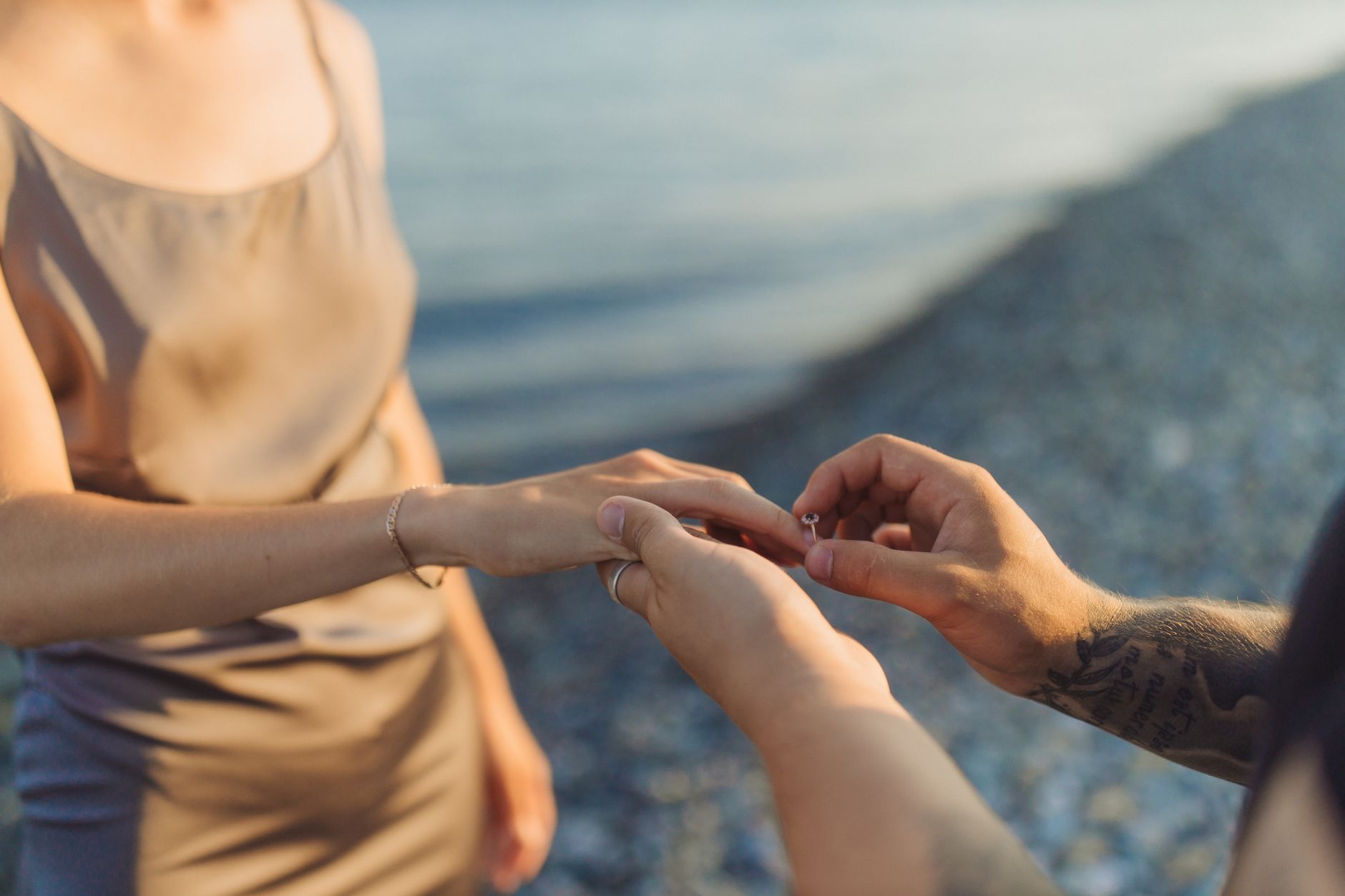
A hidden photographer on a junk boat either hides low on deck (camera ready, dressed neutral), or sits in a support kayak or small tender boat nearby. On-board hiding is trickier because space is tight and your partner will notice a stranger. We almost always use a support boat: a local guide or second vessel with a photographer who stays 30–50 metres away, zoomed lens, and radios the boat once the proposal happens. The captain keeps the support boat's presence casual ("it's a safety escort" or "local guide for the best anchor spot"). The photographer gets the ring moment, the tears, the kiss, the hug—all without being intrusive. We brief the photographer weeks ahead on the couple's energy: some couples are animated and theatrical; others are quiet and tender. The lens choice matters: a telephoto zoom (70–200mm) keeps distance and doesn't compress the moment. If a support boat isn't possible, we place a photographer on deck early and ask the couple not to look directly at water or sky while the photographer is moving into position. Honesty: both methods work, but a support boat feels less awkward for the couple.
What happens if the weather turns bad?
We build weather contingencies into every junk boat plan. A forecast check happens 3 days before departure: if wind is forecast above 20 km/h or rain is likely, we contact the couple and offer to reschedule (most boats allow free rebooking up to 72 hours prior). If the departure day dawns grey but conditions are safe—no wind, no lightning warning—we proceed: the photographer shoots in overcast light (it's actually beautiful, soft, even), flowers stay protected until the last moment, and the couple gets their moment. If rain falls during the voyage but seas stay calm, we move the proposal indoors to the boat's cabin or covered area: decor comes inside, flowers move to the table, the photographer adapts. The proposal still happens; it's just not on the open deck. True abort (full reschedule) only happens if waves exceed 1 metre or lightning is detected nearby. We keep the couple looped in via WhatsApp: hourly updates after 5 a.m. on proposal day, and a clear "go/reschedule" call by 7 a.m. The hardest part is emotional: couples have invited families to arrive in the city, flights are booked. We've learned to frame rescheduling as protecting the moment, not cancelling it. A rushed proposal in a storm is forgettable; a delayed proposal in calm water is magical.

Junk boat proposals by location: timing and boat type
| Location | Best season | Boat type | Typical duration | Hidden camera approach |
|---|---|---|---|---|
| Ha Long Bay | Oct–Apr | Traditional wooden junk (2–4 cabins) | 3–4 hours | Support boat with photographer |
| Phu Quoc | Nov–Mar | Modern touring junk or catamaran | 2.5–3.5 hours | Support boat or on-deck photographer (calmer water) |
| Trang An (freshwater) | Year-round | Small wooden sampan or tourist junk | 2–3 hours | On-board photographer (sheltered landscape) |
| Hanoi river (Red/Thai Binh) | Oct–Apr | Modern dinner junk or private speedboat | 2–3 hours | On-board photographer (narrow river, support boat harder) |
| Saigon river (Ben Bach Dang area) | Year-round | Modern dinner junk | 2.5–3 hours | Support boat (wider river, easier positioning) |
Each location has trade-offs: a Ha Long Bay junk offers prestige and scale but needs more notice; a river junk is more accessible and shorter but feels less remote. We choose based on the couple's timeline and how much "escape" they want. Ha Long or Phu Quoc = adventure. Hanoi or Saigon river = intimacy with a city backdrop.
What custom details make a junk proposal feel real?
A custom cake or dessert delivered to the boat tastes better than anything pre-made, and it's a moment in itself: the captain brings it out timed to the proposal, or it appears on a table after the ring moment. A small bouquet of flowers—not a huge one, something she can hold without it drooping—stays in her hands for photos. A Bluetooth speaker hidden on deck plays one song at the exact moment: we test the speaker beforehand and load a USB stick (no streaming delays). A written vow or note tucked into the ring box adds shock value. We've seen proposals where the couple's first-dance song plays as she says yes; others where there's pure silence and just the sound of water. The most memorable detail we've arranged is a simple one: a letter from her parents, waiting in the cabin, that she finds after saying yes. These aren't expensive add-ons; they're intentional details that show the proposal is for her, not just for Instagram. And they're easier to execute on a boat (controlled environment) than in a crowded restaurant.
Chat with a planner on WhatsApp
What to check before you book a junk boat proposal
- Boat availability: 4–6 weeks' notice is standard. Peak season (Oct–Apr) books fastest. Ask: does the boat allow external catering? Does it have a kitchen if you want a meal? Are there private cabins for a pre-proposal photo?
- Captain and crew briefing: We provide a one-page timeline to the captain 1 week before. Confirm they've done proposals before and understand the secret part (some crews have loose lips).
- Photographer logistics: If using a support boat, confirm the boat rental cost separately and that communication (radio/WhatsApp) works on the water. Test it.
- Flowers and cake delivery to the dock: Confirm dock address, unloading bay, timing. We arrive 1.5 hours early to brief the crew on handling delicate items.
- Weather policy and reschedule terms: Understand what counts as "too dangerous" and whether the boat allows free rebooking. Most do up to 72 hours; some charge a fee if you cancel within 48 hours.
- Sun and wind exposure: Ask about covered areas. A junk boat with a cabin or shade roof is safer for decor and photos on hot days or if light winds are forecast.
- Sound and music: Test Bluetooth range and speaker volume. Water reflects sound in odd ways; what sounds good on land can be tinny on a boat. Bring a wired speaker backup.
A decision framework: junk boat or another venue?
Choose a junk boat if: you want total privacy, you're in love with water, you don't mind 4–6 weeks' planning, and weather flexibility is possible (rescheduling is acceptable). Choose another venue if: your timeline is under 3 weeks, you need a guaranteed date (rain reschedules are a no), or you want a big audience (family or friends on board complicates logistics and the surprise).
We also plan romantic dinners on boats and full proposal events that aren't waterborne—so if a boat feels off, we have other ideas. The junk boat is one tool in a planner's kit, not the only option.
Pages from our team you may need
- marriage proposal planning
- anniversary celebration planning
- private romantic dinner setup
- flowers and bouquets
- custom cakes and desserts
FAQ
How much does a junk boat proposal cost?
Ask us for a quote on WhatsApp. Cost depends on the boat type, location (Ha Long Bay costs more than a Hanoi river junk), season, duration, and whether you add a photographer, flowers, cake, and decor. Most couples spend more on the overall coordination than on the boat hire itself.
Can we bring family or friends on the boat?
Yes, but it changes the surprise. If family is on board, the proposal is semi-public, which some couples love and others hate. We recommend keeping it just the couple and the crew; family can wait at the dock or arrive later for a celebration dinner.
What if the proposal happens and the ring doesn't fit?
This has happened. A ring that fit at the jeweller's can feel tight on a nervous hand, or the jeweller's sizing was off. Carry a half-size up or down if you suspect this. If it's too tight, pause, acknowledge it as a funny story, and sort it later. The proposal already happened; the fit doesn't undo the yes.
Can we eat a full meal on the boat during the proposal?
Yes, if you book a junk with a galley kitchen and brief the crew 2 weeks ahead. Lunch on a moving boat is rougher than on an anchored boat, so we usually anchor first, eat, then propose. This adds 1–1.5 hours to the timeline.
What if my partner gets seasick?
Brief her—or him—beforehand: "We're spending a few hours on a boat." Calm seas (Oct–Apr, mornings, protected bays) reduce risk. Sea-sickness tablets exist and work. If she's prone to motion sickness, choose a larger boat (less rock) or a river junk (calmer) over a smaller open-water vessel. A proposal where someone is nauseous is a memory, but not a happy one.
Do we really need a hidden photographer, or can we just use our phone?
You can use your phone and get blurry shots of the proposal moment. Or you can hire a photographer and have an image where you're both clear, the water is sharp, and the emotion is caught. Most couples regret not having real photos; almost none regret having them. We recommend a photographer. If budget is tight, a support-boat photographer (not on-board) costs less than a full-day wedding photographer.
What if the wind blows our decor into the water?
This is rare if the boat is anchored and wind is under 15 km/h. We weight everything and test setups before the couple arrives. If something does go overboard, we move on—the proposal doesn't depend on decor. The memory is the two of you, not a garland. --- Chat with a planner on WhatsApp | Tell us about your moment
Chat with a planner
Tell us the city, the date and the kind of moment. A planner replies on WhatsApp in English with ideas and what is possible.
FAQ
How much does a junk boat proposal cost?
Ask us for a quote on WhatsApp. Cost depends on the boat type, location (Ha Long Bay costs more than a Hanoi river junk), season, duration, and whether you add a photographer, flowers, cake, and decor. Most couples spend more on the overall coordination than on the boat hire itself.
Can we bring family or friends on the boat?
Yes, but it changes the surprise. If family is on board, the proposal is semi-public, which some couples love and others hate. We recommend keeping it just the couple and the crew; family can wait at the dock or arrive later for a celebration dinner.
What if the proposal happens and the ring doesn't fit?
This has happened. A ring that fit at the jeweller's can feel tight on a nervous hand, or the jeweller's sizing was off. Carry a half-size up or down if you suspect this. If it's too tight, pause, acknowledge it as a funny story, and sort it later. The proposal already happened; the fit doesn't undo the yes.
Can we eat a full meal on the boat during the proposal?
Yes, if you book a junk with a galley kitchen and brief the crew 2 weeks ahead. Lunch on a moving boat is rougher than on an anchored boat, so we usually anchor first, eat, then propose. This adds 1–1.5 hours to the timeline.
What if my partner gets seasick?
Brief her—or him—beforehand: "We're spending a few hours on a boat." Calm seas (Oct–Apr, mornings, protected bays) reduce risk. Sea-sickness tablets exist and work. If she's prone to motion sickness, choose a larger boat (less rock) or a river junk (calmer) over a smaller open-water vessel. A proposal where someone is nauseous is a memory, but not a happy one.
Do we really need a hidden photographer, or can we just use our phone?
You can use your phone and get blurry shots of the proposal moment. Or you can hire a photographer and have an image where you're both clear, the water is sharp, and the emotion is caught. Most couples regret not having real photos; almost none regret having them. We recommend a photographer. If budget is tight, a support-boat photographer (not on-board) costs less than a full-day wedding photographer.
What if the wind blows our decor into the water?
This is rare if the boat is anchored and wind is under 15 km/h. We weight everything and test setups before the couple arrives. If something does go overboard, we move on—the proposal doesn't depend on decor. The memory is the two of you, not a garland. --- [💬 Chat with a planner on WhatsApp](https://wa.me/84338762340) | [💍 Tell us about your moment](/contact)
More like this
Marriage proposal planning
Best Places for Surprise Proposal in Da Lat: A Planner's Guide
Da Lat's misty highlands and romantic architecture make it Vietnam's premier proposal destination. We share exactly where couples say yes, what to book first, and how we choreograph the surprise from start to finish.
Marriage proposal planning
Best Places for Surprise Proposal in Ninh Binh: Hidden Gems & Planning Tips
Ninh Binh's dramatic landscape—limestone peaks, river valleys, and ancient temples—creates natural proposal venues. We help couples choose the right spot, manage weather, and coordinate every detail so you focus on the moment.
Marriage proposal planning
Best Places for Surprise Proposal in Ha Long Bay
Ha Long Bay offers dramatic limestone backdrops and private water settings ideal for proposals. We reveal the best locations, timing, and how to orchestrate a flawless moment with professional coordination.