 Cáo Moments
Home › Blog › Marriage proposal planning
Proposal in Vietnam: What to Expect When Planning Your Moment
By the Cáo Moments team · 2026-11-01
A proposal in Vietnam is a private, choreographed moment—typically 2–4 hours from start to finish—that combines venue booking, a custom dinner or setup, flowers, hidden photography, and backup weather plans. Most couples choose between intimate restaurant dinners, private suite surprises, scenic outdoor setups near water or mountains, or elopement moments. Seasons matter: November–March offer cool, dry weather ideal for outdoor setups; April–October brings heat and monsoon risk, requiring indoor fallback spaces. The process starts 6–8 weeks before your target date; you'll decide your setting, whether your partner knows anything, how many people (just you two, or with family nearby?), and your vibe (formal, casual, adventurous). We coordinate every piece—vetting the venue, sourcing flowers, arranging a photographer who hides until the moment, designing a custom cake or champagne setup, managing timing via WhatsApp—and we stay flexible: if rain hits a garden proposal at dusk, we pivot to the backup indoor space the same afternoon. Budget depends on venue tier, guest count, and design detail; ask us for a quote on WhatsApp. The biggest mistake couples make is underestimating how much work a "simple" moment takes, or telling too many people and losing the surprise. --- Chat with a planner on WhatsApp
What Season Should You Choose for Your Proposal?
Vietnam's weather follows two clear patterns: cool and dry from November to March, humid and rainy from April to October. If you propose outdoors—on a rooftop with a river view, in a garden, or by the coast—November through March gives you the best odds of clear skies and comfortable temperatures for you and your photographer. April to October can work, but you'll need a strong backup plan: an indoor suite, a covered pavilion, or a restaurant with large windows. Rain doesn't cancel proposals—it just moves them. We always book a second venue (same aesthetic, indoors, confirmed in advance) and watch the forecast together starting two weeks before. If weather forecast shows >60% chance of heavy rain the day of, we call by day four beforehand and shift to the backup; you lose nothing because both spaces are already paid and styled. Cool season also means your partner won't be sweating through their outfit during photos, and flowers last longer in the arranging and in the photos.

Where Do Most Couples Propose in Vietnam?
Our couples choose three main settings: intimate indoor dinners (a private or semi-private room in a boutique hotel, a villa, or a riverside pavilion), scenic outdoor moments (gardens, waterfronts, mountain viewpoints, rice terraces), and surprise setups in your accommodation (a suite decorated with flowers and candles, champagne waiting). Hanoi couples often pick rooftop or lake-view venues; Ho Chi Minh City leans toward garden villas and rooftop bars (pre-ceremony, before guests arrive); Hoi An and Da Nang favor garden and beachfront moments; Phu Quoc and Ha Long Bay attract elopement-style propositions with just the two of you and a photographer. Each location has a rhythm: city venues need booking 4–6 weeks ahead; remote outdoor sites may need permits and access arranged 8+ weeks ahead. The choice shapes everything—timing, what the photographer can capture, whether you'll have music, how many people can actually fit. A private room proposal feels intimate; a garden moment feels grand; a beachside setup feels adventurous. Pick the one that matches how your partner would want to be proposed to, not what looks best on Instagram. We've seen couples choose the "wrong" aesthetic and regret the emotion doesn't match the setting.
How Do We Keep the Secret if We're Planning Everything Together?
This is the question we hear most. If your partner doesn't know, you handle all communication with us via WhatsApp: we never email, we never tag you on Instagram, we speak in code ("the surprise," "the evening," "the moment") if discussing in writing. If your partner does know (which is increasingly common), they pick the venue and vibe with you, but they don't know the date or the specific setup details—flowers, photographer, cake, music timing. We've run mixed-knowledge proposals: you and your partner pick the restaurant together, but you secretly book the back room, hire a florist to decorate it that afternoon, and brief the photographer separately. On the day, you tell your partner you're taking them to dinner; the surprise is the setup and the timing, not the venue. For unknown proposals: book during a time your partner expects you to be working or out with friends. If you're coordinating by phone, use a separate WhatsApp account if you share a phone. Tell us you need a backup date (and keep it quiet)—we'll hold two dates if needed. The moment your partner sees the flowers or hears the music, the secret is done: the surprise is genuine, and the photos capture their true first reaction.
What Does a Proposal Timeline Actually Look Like?
Start here: 6–8 weeks out, decide your target date (or a backup date if weather is uncertain), your location (city, venue type), your vibe (surprise or known, with others or just you two), and your budget. Week 1: We'll ask you detailed questions—your partner's style, any venues they've mentioned, dietary restrictions, music preferences, photographer style—and send you three venue options to choose from. Week 2–3: You confirm the venue, we get the space locked and visit to assess lighting and layout. Week 4: Flowers ordered, custom cake or champagne order placed, photographer and any musicians confirmed. Week 5–6: All decor ordered; we create a minute-by-minute runsheet (8:15 p.m. you arrive, 8:20 p.m. florist finishes setup, 8:25 p.m. photographer is hidden in position, 8:30 p.m. you walk her in, 8:33 p.m. proposal moment, 8:35 p.m. photographs begin). Week 7: Final confirmations with all vendors; we brief the photographer, the venue staff, the musicians. Two weeks before: We watch the weather forecast. If outdoor, we finalize backup venue timing. One week before: You confirm your outfit (the photographer needs to know color, to coordinate lighting). Three days before: All flowers, cake, decor confirmed in stock. Day before: Photographer and team do a final walkthrough if possible; we text you timing adjustments and any last-minute changes. Day of: We're on WhatsApp from noon onward, managing every vendor, watching the weather in real-time, and keeping you calm.
What Can Go Wrong, and How Do We Handle It?
Rain is the obvious one. Flowers can wilt in heat if delivery timing slips. The venue double-books your space (rare, but it happens). Your partner gets suspicious and you panic. The photographer's car breaks down. The cake arrives with an error in the spelling or design. The restaurant staff forgets you're coming and seats your table in the main dining room instead of the private one. The florist misunderstands the color of the flowers you want. Your partner gets a text from a friend that spoils the surprise. Here's what actually happens: we build buffers into every step. Flowers are ordered and delivered the morning of, not the day before, to stay fresh. We confirm the venue space 48 hours and 24 hours before—in writing, with photos of your reserved space. We keep your photographer's number and a backup photographer's number; if one can't make it, we've already informed the backup. If your partner gets suspicious, we help you craft a believable reason for the outing (a friends' birthday dinner, a restaurant you've both talked about, a date night to make up for being busy). If the cake arrives wrong, we've already scouted a backup bakery that can do a same-day fix (plain frosting, your names written on it with fresh flowers on top—not ideal, but it works). We text the venue every morning with a photo of your setup so you can see it's done and correct any details before your partner arrives. The real insurance is this: we stay in touch with you the entire day, we have every vendor's number, and we don't rely on anything being perfect—we plan for it to be fixable.
Should You Include Other People, or Keep It Just the Two of You?
This is a design choice, not a logistical one. A surprise proposal with just the two of you means more privacy, a quieter moment, and easier photography (the photographer can move more freely). Adding close family or friends nearby means witnesses, immediate celebration, and someone to help coordinate if you're emotional. Adding lots of people (rehearsal dinner style) means less surprise and more moving parts, but it can feel like a party. We've run all three. The surprise-just-you-two approach is what most international couples pick: you two cry, kiss, take photos, then go celebrate with others later. If family is coming from abroad, some couples do a proposal moment in the late afternoon or evening, then a small family dinner the next evening so everyone is rested. If you want friends hidden nearby (a separate table in the restaurant, or waiting at a bar after), we can arrange that—but you have to brief them separately on the timing and plan the reveal carefully, because a surprise ruined by a cheer from the wrong moment is worse than no surprise. The romantic sweetspot: just you two, a professional photographer nearby, maybe one trusted family member knowing and coming later. Anything else adds coordination overhead and dilutes the intimacy of the moment itself.
| Setup Type | Best For | Planning Time | Key Complexity |
|---|---|---|---|
| Private restaurant room, dinner | Intimate, elegant, no weather risk | 4–6 weeks | Booking the right room, managing timing around service |
| Outdoor garden or rooftop | Romantic, visual, flexible vibe | 6–8 weeks | Weather backup, lighting at golden hour, photographer positioning |
| Suite surprise (decorated, no dinner) | Cozy, private, personal | 4–6 weeks | Logistics of decorating while you're out; keeping partner away long enough |
| Elopement moment (scenic outdoor location) | Adventure, small witness, raw emotion | 8–10 weeks | Access permits, travel distance, weather windows, full-day coordination |
| Beachfront or waterfront | Dramatic, natural beauty | 6–8 weeks | Tide times, wind, sand on clothes/flowers, backup indoor pavilion |
How Does Photography Capture a Genuine Reaction?
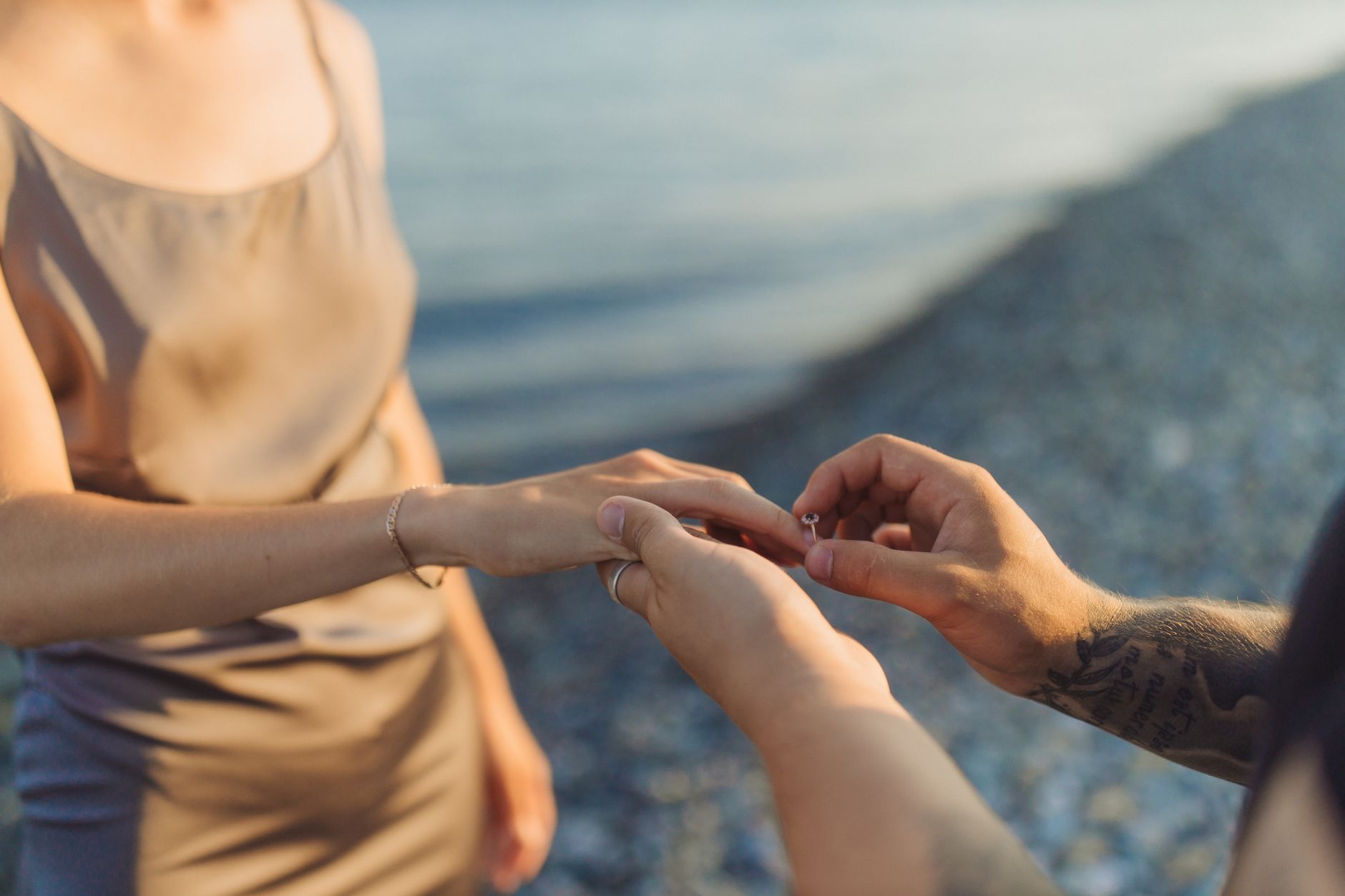
This worries many couples: if the photographer is hidden, can they really capture the proposal moment? Yes. We place the photographer where they can see your face and your partner's face—usually 10–15 feet away, partially concealed (behind a pillar, in a doorway, on a mezzanine), with a long lens. They do NOT burst-shoot with a loud camera. They use silent or near-silent shutter modes, and they frame shots that feel voyeuristic, not staged: your hands shaking as you get the ring out, your partner's mouth opening, the two of you holding each other, tears, laughter. The photos that matter most are the ones where your partner doesn't know they're being photographed—that's when the realness shows. After the proposal (within seconds), we reveal the photographer, and they move in for posed shots: the ring close-up, you holding each other, you kissing, the venue decorated behind you. Most couples want about 200–400 photos total: 30–50 from the hidden moment, 150–300 from the posed celebration after. A few couples ask us not to hide the photographer at all; they want the proposal to feel like a joint photoshoot. That's fine—the emotional weight is less, but the photographs are polished. We also always film video: either a full edited video (5–10 minutes, with sound, your vows or words, music) or a raw footage compilation your videographer hands to you same-day or next-day. Most couples watch the video for the first time weeks later, when they're calm enough to really absorb it.
What's the Difference Between a Proposal and an Elopement Moment?
A proposal is the moment you ask. An elopement is the moment you get married (without a large wedding ceremony). Some couples do both on the same day or trip (propose one afternoon, elope the next morning); most do one or the other. We coordinate proposals for all couples. If you're thinking about an elopement moment—a small, intimate ceremony with just the two of you or a handful of close people—that's a different scope: it includes marriage logistics (paperwork with Vietnam's immigration, a legal officiant, vows, rings, a ceremony structure). For elopement planning, see our guide here. For a proposal, you're just asking the question; everything after is celebration and planning the bigger wedding later (or not—plenty of couples propose, celebrate, and then decide on a formal wedding years later, or never). The proposal moment is what we specialize in on the Cáo Moments team.
What if You're Renewing Your Vows or Celebrating an Anniversary Instead?
The same logic applies: a private moment, decor, flowers, photography, a meal or setup, weather planning, a hidden photographer. For anniversary celebrations, we use the same playbook. For vow renewals, it's essentially a proposal re-enactment plus new vows. The timelines are identical, the venue options overlap, and the emotional stakes are just as high. Many couples tell us that renewing vows, after years together, feels even more vulnerable than the original proposal—you're choosing each other again, and documenting it. We give those moments the same care and secrecy.
Where Can You Celebrate After in Each City?
Once the proposal is done—you've cried, kissed, taken photos—where do you go next? In Hanoi, couples often move to a rooftop bar or a riverside restaurant for champagne and a quiet dinner with close friends. In Ho Chi Minh City, garden villas often have lounges attached, so you can move from proposal space to celebration space seamlessly. In Hoi An, the lantern-lit streets are stunning for a post-proposal walk and dinner. In Da Nang, beachfront restaurants work well for an evening celebration. In Phu Quoc, a beach resort usually has everything on-site. The best proposals flow: proposal moment (15–30 minutes), photographs (30–45 minutes), then move to the celebration space without your partner having to change clothes or reapply makeup. We coordinate that flow—the photographer knows where you're going next, the champagne or dinner is waiting, the timing is tight so emotions stay high.
Chat with a planner on WhatsApp
What Should You Decide Before You Contact Us?
You don't need to know everything. But these three questions help us help you faster:
- When are you thinking? (A specific month, or a range. If you're unsure, we can help you pick a season.)
- Where? (A city, or the country generally. If you have no idea, we'll suggest based on your vibe.)
- Does your partner know? (Completely surprise, or do they know you're planning something but not the details?)
Everything else—venue type, flowers, photographer style, how many people—we figure out together on a WhatsApp chat. You don't have to have a budget in mind (though it helps). You don't have to know the specific restaurant. You don't have to have a ring yet. The sooner you reach out, the more options we have and the more time we have to plan properly. Last-minute proposals (under 3 weeks) are possible but stressful; they cost the same, but we have to work faster and some vendors may not have availability.
Tell us about your moment
What to Check Before You Plan
- Your visa and your partner's visa: Make sure you're both legally in Vietnam for the dates you want. Proposal timing can't move if either of you has a visa departure date.
- Your partner's schedule: If it's a surprise, make sure they don't have a work trip or a call they can't reschedule.
- Venue availability: Popular restaurants and gardens book out during peak season (November–March); start planning early if you want a specific place.
- Photographer availability: Good photographers can be booked 2–3 months ahead. We have a trusted network, but confirming early is safer.
- Flower availability: Certain flowers are seasonal in Vietnam. Roses and orchids are reliable year-round; peonies and some imported flowers depend on the season.
- Your own emotional readiness: Some people get cold feet as the proposal gets closer. That's normal. Talk to us if you're nervous—we've heard it before and we can help.
- Storage for the ring: If your partner might find it, plan where you're keeping it safe until the moment.

FAQ
How much does a proposal in Vietnam actually cost?
Budget depends on venue tier, guest count, and design. Ask us for a quote on WhatsApp—we'll give you options from intimate to elaborate, and you pick what feels right.
Can we do a proposal if we're not staying long in Vietnam?
Yes. Many couples arrive for a 3–5 day trip and propose on day two or three. We compress the timeline (4 weeks becomes 2–3 weeks), but we still vet vendors and run backups. Booking early is key.
What if the proposal doesn't go as planned emotionally—my partner cries too hard, or seems shocked in a bad way?
We've seen every reaction. Tears, shock, joy, silence—all are real. The photographer captures it all. If your partner says no, that's rare, but we're prepared to pivot gracefully (the celebration becomes a quiet debrief, and we help you figure out next steps). Trust your instinct about whether your partner is ready.
Do we need to buy a ring before we contact you, or can you help us with that?
You don't need a ring before planning. Some couples buy a ring first, some propose with a placeholder band or no ring and buy it together after. We don't sell rings or recommend jewelers—that's your personal choice. If you want a ring but haven't bought one, do that early so it's ready for the proposal.
Can we do a proposal if my partner is not comfortable with big surprises?
Absolutely. Many proposals are known—your partner knows you're planning something, they just don't know when or how. This takes the stress off keeping a secret, and the surprise becomes the setup, not the moment itself. It's just as romantic and often easier to plan.
What if we want to include our families, but they're in other countries and can't be there?
We can set up a video call so family watches live via WhatsApp or Zoom. Or we film the moment and send video clips to family the same night. Many international couples do this—the proposal is private, then family joins the celebration by video.
Chat with a planner
Tell us the city, the date and the kind of moment. A planner replies on WhatsApp in English with ideas and what is possible.
FAQ
How much does a proposal in Vietnam actually cost?
Budget depends on venue tier, guest count, and design. Ask us for a quote on WhatsApp—we'll give you options from intimate to elaborate, and you pick what feels right.
Can we do a proposal if we're not staying long in Vietnam?
Yes. Many couples arrive for a 3–5 day trip and propose on day two or three. We compress the timeline (4 weeks becomes 2–3 weeks), but we still vet vendors and run backups. Booking early is key.
What if the proposal doesn't go as planned emotionally—my partner cries too hard, or seems shocked in a bad way?
We've seen every reaction. Tears, shock, joy, silence—all are real. The photographer captures it all. If your partner says no, that's rare, but we're prepared to pivot gracefully (the celebration becomes a quiet debrief, and we help you figure out next steps). Trust your instinct about whether your partner is ready.
Do we need to buy a ring before we contact you, or can you help us with that?
You don't need a ring before planning. Some couples buy a ring first, some propose with a placeholder band or no ring and buy it together after. We don't sell rings or recommend jewelers—that's your personal choice. If you want a ring but haven't bought one, do that early so it's ready for the proposal.
Can we do a proposal if my partner is not comfortable with big surprises?
Absolutely. Many proposals are known—your partner knows you're planning something, they just don't know when or how. This takes the stress off keeping a secret, and the surprise becomes the *setup*, not the moment itself. It's just as romantic and often easier to plan.
What if we want to include our families, but they're in other countries and can't be there?
We can set up a video call so family watches live via WhatsApp or Zoom. Or we film the moment and send video clips to family the same night. Many international couples do this—the proposal is private, then family joins the celebration by video.
More like this
Marriage proposal planning
Best Places for Surprise Proposal in Da Lat: A Planner's Guide
Da Lat's misty highlands and romantic architecture make it Vietnam's premier proposal destination. We share exactly where couples say yes, what to book first, and how we choreograph the surprise from start to finish.
Marriage proposal planning
Best Places for Surprise Proposal in Ninh Binh: Hidden Gems & Planning Tips
Ninh Binh's dramatic landscape—limestone peaks, river valleys, and ancient temples—creates natural proposal venues. We help couples choose the right spot, manage weather, and coordinate every detail so you focus on the moment.
Marriage proposal planning
Best Places for Surprise Proposal in Ha Long Bay
Ha Long Bay offers dramatic limestone backdrops and private water settings ideal for proposals. We reveal the best locations, timing, and how to orchestrate a flawless moment with professional coordination.