 Cáo Moments
Home › Blog › Marriage proposal planning
Marriage Proposal in Ho Chi Minh City: Planning & Execution Guide
By the Cáo Moments team · 2026-11-01
A marriage proposal in Ho Chi Minh City with Cáo Moments means you choose a venue—a riverside terrace, a boutique hotel suite, a garden rooftop—and we coordinate everything else: custom floral arrangement, bespoke cake, ambient lighting and music, a hidden photographer and videographer, and real-time backup plans if weather shifts. You stay in character; we choreograph the staff, time each element, and handle all English-language logistics on WhatsApp. A proposal typically takes 2–4 hours total, with 30–45 minutes of core moment (the question, cake, photos with the venue as backdrop). The cost varies by venue choice, guest count, and complexity; ask us for a quote on WhatsApp. Most couples ask about timing (morning light vs. golden hour), how we keep the secret from their partner, and whether rain will ruin the setup—we brief you on all three before you commit.
How do we actually plan your Ho Chi Minh City proposal?
We start with a WhatsApp conversation about your partner: what moves them—sunset, flowers, privacy, or intimacy with close family? From there, we sketch three venue types and timelines. You narrow it to one. We then book the space (often 2–3 weeks ahead), brief the staff in person (they sign a secrecy agreement), order custom cakes and desserts, source the floral arrangement, and design lighting and music to match your partner's mood, not ours. By week two before the proposal, we've done a full dry run at the venue without you—walking the sightlines, testing sound, marking where the photographer will hide. You approve photos of the setup. On the day, we arrive 3 hours early. We're texting you checkpoints: "flowers just laid," "cake arrived," "photographer in position." You stay calm and show up at the agreed minute. We handle the rest.

What venues work best for proposals in Ho Chi Minh City?
We've orchestrated proposals on river-view rooftops, in private hotel suites, gardens with water features, and intimate back rooms of upscale venues. Each has trade-offs. A rooftop gives you high light and an open sky for photos, but heat and glare at midday, wind at dusk. A hotel suite gives you climate control and elegance, but tight space for a photographer and no natural backdrop. A garden offers greenery and natural light, but requires contingency tents if rain forecasts above 40%.
The best choice depends on your partner's personality. If they love being seen and celebrated, a semi-public rooftop or garden works. If they're private and overwhelmed by crowds, book a hotel suite or intimate back room. We've also run proposals on a private dining deck overlooking the river, which splits the difference—natural backdrop, semi-private, weather-protected pergola overhead.
Our recommendation: tell us three venues you'd consider, and we'll visit each, assess light at your proposed time, meet staff, and report back on ease of coordination. Most couples choose based on ambiance fit, not just photo potential.
How do you keep the proposal a secret?
We treat secrecy as a production detail, not an afterthought. Here's how: you tell us if your partner knows a proposal is coming or has no idea. If they're surprised, we use coded WhatsApp language—"the moment" instead of "proposal," and we never text them directly. We ask you to handle all your partner's questions about the day's plan. We never contact their friends or family unless you've briefed them and given us their number privately.
On the day itself, we ask you to lie credibly—"we're going out for an early dinner" or "I want to show you this rooftop before sunset." We don't coach you on phrasing; you know your partner better. What we do: we time our setup so that you and your partner arrive together and see the flowers, cake, and lighting for the first time with you. The photographer and videographer stay out of sightline until after you've asked the question. One team member remains backstage (by the kitchen or a service corridor) to cue the photographer and handle any live adjustments.
The hardest part isn't the secret itself—it's not over-coordinating. Many couples text us constantly in the days before, which makes them nervous and visible. We ask you to trust the timeline, ask one check-in call 48 hours prior, and then step back. Anxiety leaks. Calm reads as normal.
What happens if it rains on your proposal day?
Rain in Ho Chi Minh City is common, especially May–September. We plan for it. When you book a venue, we ask: does it have a covered terrace, a backup indoor space, or a pergola we can string lights under? If not, we rent a clear-top tent (no cheap plastic—elegant, high-ceilinged, still feels open) or suggest moving the core moment indoors and the photos to a covered gallery or suite hallway.
Our rule: light rain (drizzle under 10mm forecast) is workable and often beautiful—it keeps heat down, creates mist in photos, and feels intimate. Heavy rain (above 20mm) means we shift the timeline 2–4 hours or move to the backup space. We monitor the forecast daily from day five before, and alert you by day two if a shift looks likely.
What we don't do: cancel or postpone without a conversation. We've run proposals in rain before, with a modified timeline and a tent. It's still magical. The videographer keeps the camera under a rain hood. The photographer works under the tent edge. You focus on your partner, not the weather. We've never had a couple regret moving forward.
Who should you tell before the proposal, and when?
This depends entirely on your plan. If you want it to be a surprise, tell no one except us. If you want family present, tell them 1–2 weeks before and brief them on arrival time, where to stand (so the photographer can frame them), and the cue for when to enter (usually right after the question, or during cake). If you're inviting friends, do the same.
A common mistake: telling too many people too early. By week three, someone mentions it to your partner by accident. Our advice: keep the inner circle small (parents only, or a best friend), brief them very late (4–5 days before), and give them a written timeline and rules (no photos before we say, no messages to the couple on the day, arrival time is fixed). If your partner is the type who researches surprises, tell them a proposal is coming but not when or where—it keeps them engaged but not hunting.
We also ask: do you want your partner to know we're there? Most couples say no—the photographer and videographer should be invisible. A few couples say yes, and want their partner to feel celebrated by a team effort. Either way works. We just need to know, so we can brief staff and position cameras accordingly.
What should your proposal timeline look like?
A typical proposal runs like this:
| Stage | Time | What's happening |
|---|---|---|
| Arrival (early) | You arrive 15–20 min before your partner | We finish final checks, photographer hides, lighting on, music cued, staff briefed |
| Your partner arrives | Minute 0 | You greet them, lead them to the spot (we've coached you on phrasing) |
| The question | Minutes 1–3 | You ask, they say yes, you embrace—photographer is shooting |
| Celebration | Minutes 4–8 | Cake is brought out, champagne/sparkling cider, toasts if others are present |
| Photos | Minutes 9–30 | Couple and group shots, with your partner now aware of the camera and smiling naturally |
| Wind-down | Minutes 31–45 | Staff clears, you and your partner sit together, photographer leaves (or stays for candid shots if booked) |
Actual timing varies. If you're doing a full sit-down dinner after, add 1–2 hours. If family is involved and wants photos, add 30 minutes. If you've booked videography with a cinematic edit, the photographer will want 45–60 minutes of couple shots and ambient footage.
We send you this exact timeline in advance. You approve it. On the day, we stick to it—we text you time checks so you know you're on track. This prevents panic ("Are they going to be late?" "Should I go look for them?") and keeps your partner arriving at the right moment, not too early or late.
What should you decide about flowers, cake, and decor?
These are the three visual anchors of your proposal moment, and they carry your story.
Flowers: Do you want a single hand-tied floral arrangement for presentation, a floral arch framing the proposal spot, or scattered florals across the table? Hand-tied bouquets are intimate and portable—easy to photograph, easy for your partner to hold. Arches are dramatic and create a photo frame, but require setup time and look formal. Scattered flowers (low bowls, petals, garland) are romantic but can blow away or look cluttered in photos. Most couples choose a statement bouquet (roses, orchids, or seasonal blooms native to Vietnam) in your partner's favorite color, positioned near where you'll kneel or stand. Ask us to sketch three options—we'll show you via WhatsApp photos, and you pick the mood.
Cake: This isn't just dessert—it's a moment. A small two-tier custom cake (4–6 servings) is standard; it's carved at table and feels celebratory without overwhelming. Flavor matters: we ask your partner's favorite (you know this) and design the design (initials, a date, a private joke). If your partner is vegan, nut-free, or gluten-free, tell us early—our custom cake team sources accordingly. The cake arrives 20–30 minutes after the question, so it feels like a separate, planned celebration, not rushed. Some couples skip cake and do a dessert platter instead (macarons, chocolate truffles, fresh fruit)—lighter, elegant, easier to photograph individually.
Decor: Lighting is 80% of decor in Ho Chi Minh City proposals. Daylight proposals benefit from a simple tablescape—a linen, candles (unlit if it's bright out), and the flowers. Dusk proposals need string lights, lanterns, or uplighting to set mood and expose the photographer's sensor. We typically rent subtle lighting (warm-toned fairy lights or a single uplighter on the flowers) rather than dramatic colored lights—you want to feel intimate, not like you're in a nightclub. Some couples add a custom signage piece (a wooden board with your names and the date), which photographs well and guests remember. We factor all of this into the quote.
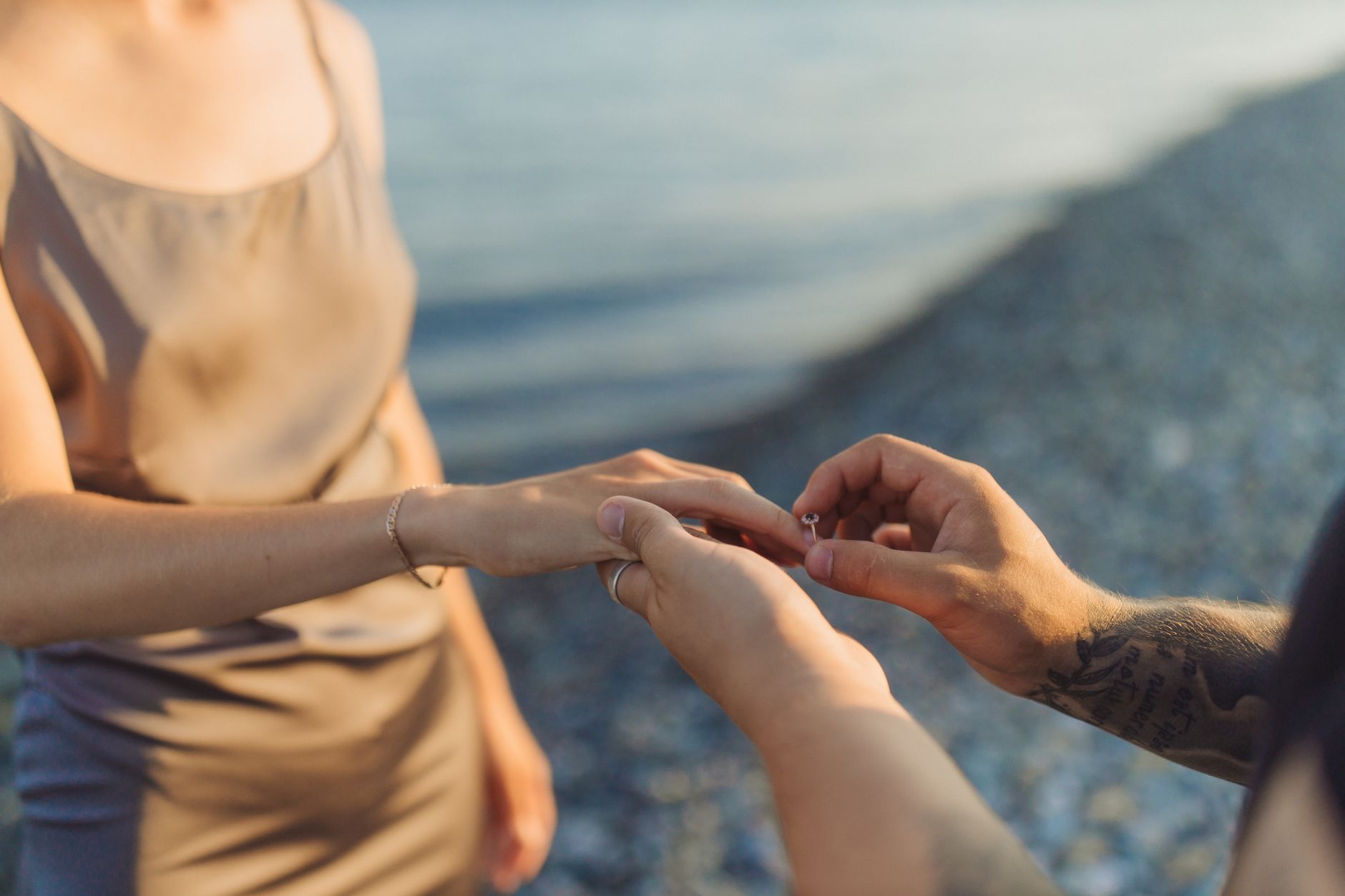
How do you choose between morning light and golden hour?
This is one of the most important decisions, and it's about your partner's mood, not just photo aesthetics.
Morning proposal (8:00–10:00 am): Soft, even light, cool tones, intimate feeling because the venue is usually quieter. Your partner is fresh. Fewer ambient guests, so you feel like the center of attention. Downside: you have the whole day ahead after the proposal—which is wonderful, but requires more planning (are you having brunch after? heading somewhere?). Mornings also mean your partner might be groggy or not fully emotionally present. Best for: partners who are early risers, love sunlight, or want a proposal followed by a full day of celebration.
Golden hour proposal (5:00–7:00 pm, depending on season): Warm, directional light that's incredibly flattering in photos. It feels romantic and cinematic. Your partner has had a full day to anticipate, so emotions are often higher. Downside: the light fades fast (15–20 minutes of peak light), so if you're late, you lose it. Also, more venue foot traffic and ambient noise. Best for: partners who love sunsets, are more emotional in evening, or prefer a proposal that transitions into a dinner rather than a full-day event.
Middle-of-day proposal (12:00–3:00 pm): Harsh light, unflattering shadows, hot venue. We almost never recommend this unless your venue has full shade or the partner specifically loves midday light (some do). Cost: ask us for a quote on WhatsApp, which varies by timing.
What we do: we ask you three questions. One, does your partner have a time they feel most like themselves (are they a morning person or a night person)? Two, how much emotional and logistical bandwidth do you have after—a full day of celebration, or a quiet evening? Three, what light do you want in the photos (compare morning softness vs. golden warmth)? From there, we recommend one timing and explain why. You override us if you prefer another—we've orchestrated all three successfully.
What goes wrong, and how do we prevent it?
The partner is late or doesn't show up on time: We ask you to build in a 15-minute buffer. If they're running late, you text us, we pause the photographer and hold the cake in the kitchen. No stress. We've had one couple arrive 45 minutes late due to traffic; we simply reset everything and proceeded as normal. The moment isn't diminished by timing shifts—it's diminished by panic.
The photographer is spotted before the question: This has happened once in our memory. The photographer was moving between hiding spots and your partner caught a glimpse. Solution: we immediately shifted the photographer to a different vantage, and the couple didn't know anything was off. They got brilliant photos. The lesson: we always brief photographers to move slowly and stay low. If your partner is very observant, we ask in advance, and we position cameras even more carefully.
The cake arrives damaged or the wrong flavor: Backup cakes are baked and stored at a nearby kitchen. If damage happens en route, we swap it in 10 minutes. If flavor is wrong, it's on us—we source a backup dessert (macarons, fruit tart, a bakery item from nearby) and make it a story. We've never had a couple feel shortchanged.
The lighting fails or looks cheap: We test all lights 48 hours before and do a full setup run. We also carry backup battery-powered uplighters and extra fairy lights. A venue's electrical system is the main variable—we check this very early and plan accordingly.
Rain arrives hard, as forecast didn't predict: We have tent rental on speed-dial and a backup indoor space pre-scouted at every venue. We can move the core moment (flowers, you, your partner) indoors in 20 minutes and keep the magic intact.
Your partner cries so hard they can't speak: This is not a "problem"—it's beautiful. We give you a moment alone (photographer steps back), bring tissues, and let the emotion breathe. The best proposals have real tears. There's no script.
Comparison: what type of proposal package fits your needs?
| Proposal type | Best for | Includes | Duration | When to book |
|---|---|---|---|---|
| Intimate couple moment | Privacy lovers, small circle | Venue, flowers, cake, photo/video, 1–2 staff | 30–45 min | 2–3 weeks prior |
| Family celebration | Close-knit partners | All above + family arrival cue, group photos, larger cake | 60–90 min | 3–4 weeks prior |
| Friends + dinner | Social, loved-ones-focused | Venue + sit-down dinner, flowers, cake, full videography | 2–3 hours | 4 weeks prior |
| Elopement vow renewal | Renewing your commitment | Venue, flowers, cake, officiant, photographer | 45 min–1 hour | 2 weeks prior |
What to check before you book
- Venue access: Can we arrive 3 hours early? Is there a service entrance to avoid your partner seeing setup? Are there electrical outlets for lighting?
- Staff coordination: Will the venue manager sign a secrecy agreement? Are they English-speaking or do we need to translate briefings?
- Backup space: If weather shifts, is there an indoor alternative at the same venue, or do we move elsewhere?
- Your partner's allergies: Flowers, cake ingredients, any scent sensitivities?
- Guest list: If family or friends are attending, do they know arrival time? Have they seen your venue beforehand (spoiler alert potential)?
- Camera access: Can our photographer and videographer move freely, or are there restricted zones?
- Timeline flexibility: If your partner is running 30 minutes late, are you comfortable shifting everything, or do you want us to delay your arrival instead?
Ask us these on WhatsApp before you commit, and we'll answer directly.
Chat with a planner on WhatsApp
Why choose a planner for your Ho Chi Minh City proposal?
A proposal is a four-person operation: you, your partner, a photographer, and a coordinator. If you skip the coordinator, you're doing the work yourself—booking venue, managing the photographer's timeline, hiding flowers from your partner, cueing the staff, and trying to stay present during the moment itself. Most couples who try this end up stressed, and the proposal feels rushed.
Cáo Moments is the coordinator. We free you to focus on your partner and the question. We handle logistics, secrecy, backup plans, and photo direction. We've managed proposals on romantic Saigon evenings for over a decade, and we know the venues, the light, the seasonal weather patterns, and the staff personally. We also design custom cakes and source flowers from suppliers we trust. When something shifts (rain, late arrival, a vendor hiccup), we problem-solve in real time on WhatsApp, keeping you informed and calm.
Most couples ask: "Will it feel natural, or staged?" It will feel like the best moment of your life that just happened to be beautifully lit and photographed. That's the job.
Next steps: planning your proposal
- Decide your timeline: When do you want to propose—next month, next season, next year? This shapes venue availability and weather planning.
- Tell us about your partner: What makes them feel celebrated? How do they react to surprises? Do they want family present?
- Choose a venue type: Rooftop with a river view, hotel suite, garden, intimate back room? We'll scout options for you.
- Approve the plan: We'll send you a full timeline, vendor names, backup plans, and setup photos (without your partner seeing).
- Show up and say yes to your partner: We'll handle the rest.
Start with a WhatsApp message—tell us your partner's name, your proposal date window, and your venue idea. We'll respond within 24 hours with next steps.
Pages from our team you may need

FAQ
How far in advance should we book a proposal?
2–3 weeks is ideal for intimate proposals; 3–4 weeks if you're inviting family or want a specific high-demand venue. We've orchestrated proposals with 1 week's notice in emergencies, but planning pressure is higher. Book as soon as you know your date.
What if my partner finds out about the proposal before the day?
It happens. We pivot. We help you reset expectations—does your partner want the proposal to still happen as planned, or does knowing change the dynamic? Some couples propose anyway, because the question and moment still matter. Others shift the plan to a different date or venue. We support either choice. Secrecy is important, but your partner's comfort is more important.
Do we have to do a proposal at a fancy restaurant or hotel?
No. We've done proposals at a quiet corner of a public park, a rooftop with just the two of you, a family home, a beach at dusk, and a gallery. The venue matters less than the intention and how we orchestrate it. Tell us what moves your partner, and we'll design something fitting.
Can we include a videographer and have it feel intimate?
Yes. A skilled videographer stays far enough away that you forget they're there. They shoot with a longer lens, move slowly, and step back during the actual question. The footage is beautiful and cinematic, but the moment feels just for you two. Most couples say the videographer was so invisible they almost forgot they were hired.
What if I'm not sure about the exact date or time?
We work with date ranges. You tell us "sometime in June" or "either evening this month," and we build a rough timeline. As you narrow it down (week by week, then day by day), we lock in vendors and confirm timing. By one week before, we need a solid date and time window (you're flexible by 30 minutes, we're flexible by a few hours if needed).
What happens to the photos and videos after the proposal?
They're yours. We deliver edited photos and a cinematic video (usually 3–5 minutes) within 2 weeks. You own the files, the copyright, and the rights to share or print. We typically provide a private link for download and optional cloud backup. Some couples print photos or frame a favorite shot; others keep videos private and share a highlights reel with family.
Chat with a planner
Tell us the city, the date and the kind of moment. A planner replies on WhatsApp in English with ideas and what is possible.
FAQ
How far in advance should we book a proposal?
2–3 weeks is ideal for intimate proposals; 3–4 weeks if you're inviting family or want a specific high-demand venue. We've orchestrated proposals with 1 week's notice in emergencies, but planning pressure is higher. Book as soon as you know your date.
What if my partner finds out about the proposal before the day?
It happens. We pivot. We help you reset expectations—does your partner want the proposal to still happen as planned, or does knowing change the dynamic? Some couples propose anyway, because the question and moment still matter. Others shift the plan to a different date or venue. We support either choice. Secrecy is important, but your partner's comfort is more important.
Do we have to do a proposal at a fancy restaurant or hotel?
No. We've done proposals at a quiet corner of a public park, a rooftop with just the two of you, a family home, a beach at dusk, and a gallery. The venue matters less than the intention and how we orchestrate it. Tell us what moves your partner, and we'll design something fitting.
Can we include a videographer and have it feel intimate?
Yes. A skilled videographer stays far enough away that you forget they're there. They shoot with a longer lens, move slowly, and step back during the actual question. The footage is beautiful and cinematic, but the moment feels just for you two. Most couples say the videographer was so invisible they almost forgot they were hired.
What if I'm not sure about the exact date or time?
We work with date ranges. You tell us "sometime in June" or "either evening this month," and we build a rough timeline. As you narrow it down (week by week, then day by day), we lock in vendors and confirm timing. By one week before, we need a solid date and time window (you're flexible by 30 minutes, we're flexible by a few hours if needed).
What happens to the photos and videos after the proposal?
They're yours. We deliver edited photos and a cinematic video (usually 3–5 minutes) within 2 weeks. You own the files, the copyright, and the rights to share or print. We typically provide a private link for download and optional cloud backup. Some couples print photos or frame a favorite shot; others keep videos private and share a highlights reel with family.
More like this
Marriage proposal planning
Best Places for Surprise Proposal in Da Lat: A Planner's Guide
Da Lat's misty highlands and romantic architecture make it Vietnam's premier proposal destination. We share exactly where couples say yes, what to book first, and how we choreograph the surprise from start to finish.
Marriage proposal planning
Best Places for Surprise Proposal in Ninh Binh: Hidden Gems & Planning Tips
Ninh Binh's dramatic landscape—limestone peaks, river valleys, and ancient temples—creates natural proposal venues. We help couples choose the right spot, manage weather, and coordinate every detail so you focus on the moment.
Marriage proposal planning
Best Places for Surprise Proposal in Ha Long Bay
Ha Long Bay offers dramatic limestone backdrops and private water settings ideal for proposals. We reveal the best locations, timing, and how to orchestrate a flawless moment with professional coordination.