 Cáo Moments
Home › Blog › Decor and surprise setups
Hotel Room Decoration Rules in Vietnam: What's Allowed
By the Cáo Moments team · 2026-11-01
Vietnamese hotels—from luxury chains to boutique properties—permit room decoration for proposals, anniversaries, and celebrations, but rules differ by venue and region. Generally, adhesive decorations (tape, removable stickers) are allowed; nail holes, permanent paint, and fire hazards are not. Beachfront resorts in Phu Quoc or Da Nang tend to be flexible; Hanoi business hotels stricter. Always request written approval from the front desk or events team at least 48 hours before setup. Setup typically takes 1–2 hours on the day of arrival; balloons, flowers, soft lighting, and fabric draping work everywhere. At Cáo Moments, we contact the hotel directly, confirm permitted materials, coordinate access with housekeeping, and design setups that leave no trace—so you're celebrated, not charged. Chat with a planner on WhatsApp
What do most Vietnamese hotels actually allow in guest rooms?
Hotels in Vietnam permit non-permanent decorations on condition they cause no damage. Removable tape, string lights on furniture, flower arrangements in provided vases, fabric backdrops clipped to headboards, and lightweight balloon columns (tied, not helium-filled) are standard approvals. Nails, adhesive hooks, glue, spray paint, and candles are typically forbidden. Three-star to well-made properties—and even small family-run guesthouses—follow similar logic: reversible, safe, and quick to remove. We've learned that the moment you phrase a request as "temporary" and "no adhesive," approval comes within hours. Hotels worry about liability and resale room condition; address that honestly, and they cooperate fully. In our experience, the actual constraint is not rule strictness but communication timing—reaching out the day before setup often triggers a "no" simply because staff haven't coordinated with housekeeping. We contact properties 2–3 weeks ahead.

Why do different cities have different decoration policies?
Hanoi's business-hotel district (near Hoan Kiem Lake surroundings) enforces strict policies because rooms turn over fast and corporate guests expect pristine condition. Da Nang's beach resorts welcome romantic setups because destination celebrations are their niche. Hoi An's heritage boutique hotels protect wooden interiors and avoid anything that could mark walls or ceilings. Phu Quoc's newer resort chains are the most permissive, actively marketing romance packages. Policy variance also reflects licensing: properties with liquor permits sometimes restrict open flames (candles); those with heritage designations forbid adhesives that could damage historic plaster. City zoning affects fire codes too—Saigon high-rises must enforce stricter fire safety rules than a riverside villa in rural Trang An. We adjust our design approach per city: Hanoi gets elegant, minimalist setups (flowers and soft lighting); Da Nang incorporates more volume (larger balloon elements, longer fabric swags); Hoi An sticks to potted plants and lantern accents. Understanding the reason behind a rule helps us work within it creatively.
How far in advance should you ask the hotel for permission?
Request approval 2–3 weeks before your arrival date, not the night before. Hotels need time to loop in housekeeping, maintenance, and shift supervisors; last-minute asks trigger refusals simply because no one is around to authorize it. We send a formal written request (email to the front desk, carbon-copied to the events or concierge team) that includes: exact date and time of setup, list of materials (balloons, flowers, string lights—no adhesives), duration of decoration, and a photo or description of the final look. Most hotels reply within 48 hours with either approval, a list of conditions, or specific restrictions. Some require a small setup fee; others request that you use their in-house florist or decorator (which we can work around by sourcing beforehand and simply arranging on-site). A few—particularly corporate chains—ask for a signed waiver. We keep copies of all approvals on our phones during the day, in case housekeeping questions the setup mid-event. Hotels almost never refuse a polite, early, detailed ask; they refuse surprise decorations or last-minute improvisation.
What materials work best and won't anger the hotel?
Silk or fresh flowers in glass vases provided by the room or brought by you (not glued to surfaces) are universally approved. String lights on battery power, clipped to existing furniture, cause zero concern. Fabric draping—tied, not pinned—creates a romantic backdrop without damage. Lightweight paper or foil balloons (clusters of 3–5, weighted with sand or water, never helium-filled) fit in most rooms and deflate easily. Candles in glass holders (or LED fakes, which hotels actually prefer) are acceptable if you confirm fire safety first. Avoid: painter's tape on wallpaper, adhesive poster putty on painted walls, glitter confetti, helium balloon fields, and anything that requires 20 minutes to remove. We've found that hotels warm to setups that add beauty without claiming space—a low arch of flowers over a bed, string lights framing a window, a table arrangement—rather than floor-to-ceiling transformations. The rule is: if the hotel could photograph it for their Instagram, it's allowed. If setup takes more than 2 hours to dismantle, it's too ambitious.
Chat with a planner on WhatsApp
What's the honest cost of room decoration, and what fees might hotels charge?
Hotel room decoration itself—flowers, lights, fabric—has no "hotel fee"; you pay for the products and setup labor. However, some properties levy a "decoration permit" or "event setup" fee (if you hire their in-house coordinator) or a "room recovery fee" if they believe you've caused minor wear. Luxury resorts often waive fees if you book their florist or cake service; boutique hotels rarely charge anything if you handle setup yourself and depart cleanly. The hidden cost is time and coordination—if you're organizing remotely (which international couples often are), you'll need a local planner to handle approvals, source materials, and manage setup day logistics. At Cáo Moments, we cover all hotel liaison, material sourcing, and setup as part of our proposal planning or anniversary celebration packages; asking us for a quote on WhatsApp gives you a transparent all-in figure without surprise hotel charges later. A common mistake: assuming any hotel will decorate your room for free. Assumption leads to panic the day before. Confirmation—early, in writing—leads to a beautiful moment.
Decision Framework: Is Your Hotel Type Likely to Approve Room Decoration?
| Hotel Type | Typical Policy | Setup Time | Material Limits | Best Approach |
|---|---|---|---|---|
| Luxury resort (well-made) | Flexible; may require vendor | 1.5–2 hrs | Flowers, lights, fabric | Request via concierge; mention you'll clean up fully |
| Upscale business hotel | Strict; requires advance approval | 1–1.5 hrs | Flowers, lights only; no tape | Email events team 2–3 weeks ahead |
| Boutique/historic property | Very cautious; adhesive banned | 1 hr | Flowers, candles in holders, clipped fabric | Emphasize zero-damage; confirm in writing |
| Beachfront resort | Permissive; romance-friendly | 1.5–2 hrs | Balloons, lights, fabric, flowers | Easiest approval; confirm fire codes for candles |
| Budget guesthouse | Relaxed; personal approval | 30–45 min | Minimal; no nails, tape, or paint | Speak to owner directly on check-in |
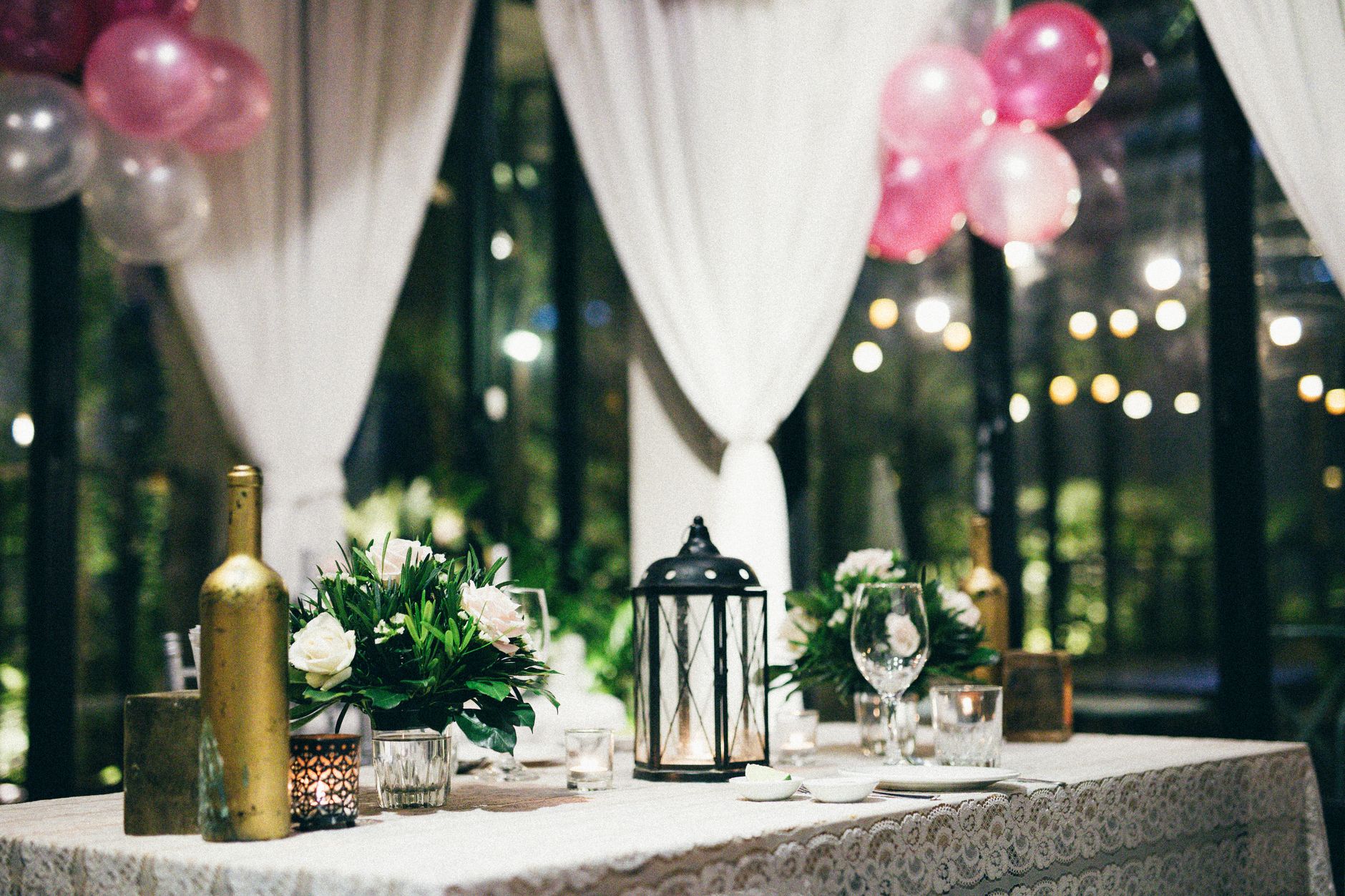
What to Check Before You Book a Hotel or Plan Your Room Setup
- Does the hotel have an events or concierge team? Larger properties have dedicated coordinators; smaller ones route requests to the front desk. Identify the right contact.
- Are there fire codes or smoke alarms? Confirm candles (or fake ones) are permitted; check for sprinkler heads near where you'll hang fabric.
- What's the room's wall material? Painted drywall (most common) is tape-friendly; wallpaper and textured plaster are not.
- Is setup on arrival day or earlier? If you arrive in the evening, coordinate a morning setup via housekeeping; evening setup risks conflict with turnover schedules.
- Does the hotel have storage for decoration materials until setup time? Ask if they'll hold flowers in their cooler or boxes in a back room.
- What's the checkout time, and who removes decorations? Confirm you'll take down everything before you leave, or ask housekeeping to do it for a small fee.
- Does the hotel photograph or video your setup? Some ask to post it on their social media; decide if you're comfortable with that before approving.
How We Plan a Room Decoration That Hotels Actually Love
We start by understanding the venue—not just "a hotel," but which hotel, which room, which city, and which hotel's actual culture. A phone call to the events manager (not an email) tells us immediately whether they're excited or cautious. We then design backward: flowers and candles that require no installation; string lights that clip to the bed frame or window; a fabric backdrop tied to the headboard with ribbon. We send the hotel a photo or video mockup of our proposed setup so they see exactly what to expect—no surprises, no ambiguity. On setup day, we arrive 2–3 hours before your arrival, coordinate with housekeeping in real time, and test lighting (battery-powered, always) before you walk in. We bring everything ourselves—flowers, lights, small decor—and never ask the hotel for materials or tools beyond room access. Thirty minutes before you arrive, we confirm with the front desk that the room is ready and undisturbed. We then position a hidden photographer or videographer in a nearby hallway or common area to capture your arrival and first reaction, without the hotel noticing or feeling invaded. On checkout, we're there to remove every decoration, restore the room to its original state, and collect any feedback from the hotel manager. This approach—radical transparency and zero friction—means hotels approve us immediately the second time we call, and they often recommend us to other guests planning moments.
Chat with a planner on WhatsApp
Real Scenarios We've Navigated
Scenario 1: The "No Tape" Hotel A four-star Hanoi hotel near the Old Quarter absolutely forbids adhesive tape on walls. We designed a setup using only: potted flowers placed on the desk and nightstand, battery string lights wound around the bed frame (clipped with fabric ties), a fabric runner laid across the bed, and a framed photo propped on the dresser. The room looked deliberately decorated without touching a surface. Hotel approved instantly.
Scenario 2: The Fire Code Restriction A beachfront resort in Da Nang has strict fire codes and forbids any candles, real or fake. We substituted: warm-toned LED fairy lights (battery, no flame), battery-powered flameless candles (legal, convincing, safe), and focused the mood on soft lighting and flower color instead of candlelight. The room felt just as romantic; the hotel had zero concerns.
Scenario 3: The Last-Minute No A couple asked us to decorate their room the morning of their anniversary dinner, without advance approval. We contacted the hotel at 9 a.m.; they said setup was impossible because housekeeping was mid-turnover. We pivoted: decorated the restaurant private dining room instead (same hotel, different team, no conflict), and it was equally beautiful. Lesson: always request 48 hours minimum; never assume availability.
Scenario 4: The Surprise Twist An international couple booked a luxury resort and mentioned they'd be celebrating an engagement. The hotel's events manager actually wanted to help and offered their florist at a discounted rate. We negotiated to source our own flowers and bouquets instead (better value, our trusted partners) and the hotel waived the setup fee in exchange for a signed agreement. Both parties won.
Pairing Room Decoration with Other Moment Elements
Room decoration alone creates ambiance; combined with other elements, it becomes a complete moment. Many couples we work with pair a decorated room with:
- A private dinner setup elsewhere (restaurant or villa) that same evening—room is revealed after the meal.
- Custom cake delivery to the decorated room, timed to arrive right before you return.
- Hidden photography that captures you discovering the room.
- Flowers and bouquets that arrive simultaneously with decoration, so freshness is guaranteed.
If you're planning a proposal, the decorated room is often the reveal space—you get engaged elsewhere, then return to a decorated room for a private moment. For anniversary celebrations, the room is the setting for a quiet night in, so decoration is more intimate (fewer florals, more lighting). For a romantic dinner setup, the room might be secondary—decorated as a surprise return destination after you've dined out. We coordinate the timing of all these elements so nothing feels rushed or logistically messy.
If you're planning a honeymoon surprise or celebrating engagement, room decoration sets the emotional tone before you've even unpacked. Talk us through your moment idea on WhatsApp, and we'll tell you exactly how a decorated room fits in and what else you might want to layer in.
When Room Decoration Isn't the Right Call
Be honest: decorated rooms work best if you'll actually spend meaningful time in the room. If your moment is entirely external—a beach picnic, a city walking tour, a boat trip—decorating your hotel room is unnecessary; the room becomes a dressing space, not a memory space. If you're only sleeping there, decoration feels like wasted effort. If your hotel is genuinely strict (ask directly; don't assume), and you can't get approval, don't fight it. Instead, redirect the budget to flowers and bouquets for a dinner table, or a custom cake delivered to a restaurant's private area, or photography at a meaningful outdoor location. Decoration is a tool, not a requirement. The moment is what matters.

FAQ
Can I decorate my room without telling the hotel?
Technically yes, but don't. Hotels discover unauthorized setups during checkout or turnover and charge recovery fees ($50–$200+, based on what we've heard from couples). You'll also stress the entire evening about getting caught. A 5-minute email request saves all of that—and almost always gets approved. The couple who hides decoration is the couple who panics.
Do I have to use the hotel's florist or decorator?
No. Hotels sometimes prefer it (revenue), but most allow you to bring your own or hire an external planner like us. Confirm in writing that outside vendors are okay, and provide the planner's name and arrival time. We always coordinate directly with hotel staff on setup day to avoid any confusion.
What if the hotel says no?
Ask why. If it's fire codes or structural concerns, those are real; respect them and pivot (we help with alternative setups). If it's a blanket policy, ask to speak to a manager; sometimes the front desk is conservative, but management is flexible. If they truly won't budge, we design a beautiful setup in a restaurant private room or a shared resort space instead, and decorate your actual hotel room in a minimal, unnoticed way (flowers, lights, nothing adhesive).
How long does decoration setup actually take?
45 minutes to 2 hours, depending on room size and decoration complexity. A simple setup (flowers, lights, fabric backdrop) takes 45–60 minutes. A layered setup (multiple floral arrangements, string light canopy, table centerpiece, props) takes 1.5–2 hours. We always build in 30 minutes of buffer time and arrive early so we're done 90 minutes before your arrival.
Will decoration damage my room or cost me a cleaning fee?
Not if you use removable materials and the hotel approves beforehand. If you use tape, nails, or glue without permission, yes—hotels bill you for wall damage ($50–$200, per our couples' reports). Stick to approved materials, and you'll check out with zero charges. We guarantee this by only using materials the hotel has signed off on.
Can I bring my own flowers, or should the hotel provide them?
Bring your own, or let us source them. Hotel florists are convenient but often pricier and less customizable. We partner with trusted local florists who deliver fresh arrangements on time, understand your vision, and cost less than hotel upcharges. We can also coordinate flower delivery directly to your room before setup.
What if my hotel doesn't have an "events team"?
Small hotels and guesthouses don't. In that case, call or visit in person and speak to the owner or head of housekeeping. Personal conversations get faster approvals than formal emails. Say: "I'm staying on [date]. I'd like to decorate the room with flowers and lights for an anniversary. Is that okay?" Most owners say yes immediately. Get their approval verbally, confirm it in a follow-up message, and you're set. --- Chat with a planner on WhatsApp | Tell us about your moment For more guidance on designing a complete celebration, explore our full decor and surprise setups collection.
Chat with a planner
Tell us the city, the date and the kind of moment. A planner replies on WhatsApp in English with ideas and what is possible.
FAQ
Can I decorate my room without telling the hotel?
Technically yes, but don't. Hotels discover unauthorized setups during checkout or turnover and charge recovery fees ($50–$200+, based on what we've heard from couples). You'll also stress the entire evening about getting caught. A 5-minute email request saves all of that—and almost always gets approved. The couple who hides decoration is the couple who panics.
Do I have to use the hotel's florist or decorator?
No. Hotels sometimes *prefer* it (revenue), but most allow you to bring your own or hire an external planner like us. Confirm in writing that outside vendors are okay, and provide the planner's name and arrival time. We always coordinate directly with hotel staff on setup day to avoid any confusion.
What if the hotel says no?
Ask why. If it's fire codes or structural concerns, those are real; respect them and pivot (we help with alternative setups). If it's a blanket policy, ask to speak to a manager; sometimes the front desk is conservative, but management is flexible. If they truly won't budge, we design a beautiful setup in a restaurant private room or a shared resort space instead, and decorate your actual hotel room in a minimal, unnoticed way (flowers, lights, nothing adhesive).
How long does decoration setup actually take?
45 minutes to 2 hours, depending on room size and decoration complexity. A simple setup (flowers, lights, fabric backdrop) takes 45–60 minutes. A layered setup (multiple floral arrangements, string light canopy, table centerpiece, props) takes 1.5–2 hours. We always build in 30 minutes of buffer time and arrive early so we're done 90 minutes before your arrival.
Will decoration damage my room or cost me a cleaning fee?
Not if you use removable materials and the hotel approves beforehand. If you use tape, nails, or glue without permission, yes—hotels bill you for wall damage ($50–$200, per our couples' reports). Stick to approved materials, and you'll check out with zero charges. We guarantee this by only using materials the hotel has signed off on.
Can I bring my own flowers, or should the hotel provide them?
Bring your own, or let us source them. Hotel florists are convenient but often pricier and less customizable. We partner with trusted local florists who deliver fresh arrangements on time, understand your vision, and cost less than hotel upcharges. We can also coordinate flower delivery directly to your room before setup.
What if my hotel doesn't have an "events team"?
Small hotels and guesthouses don't. In that case, call or visit in person and speak to the owner or head of housekeeping. Personal conversations get faster approvals than formal emails. Say: "I'm staying on [date]. I'd like to decorate the room with flowers and lights for an anniversary. Is that okay?" Most owners say yes immediately. Get their approval verbally, confirm it in a follow-up message, and you're set. --- [💬 Chat with a planner on WhatsApp](https://wa.me/84338762340) | [Tell us about your moment](/contact) For more guidance on designing a complete celebration, explore our full [decor and surprise setups](/decor) collection.
More like this
Decor and surprise setups
Fairy Lights Setup While Traveling in Vietnam: A Planner's Guide
Fairy lights transform any space into magic, but traveling with them in Vietnam's heat and humidity demands real planning. We share exactly how to pack, power, and install them reliably.
Decor and surprise setups
Fairy Lights Setup Vietnam vs Bali: Climate, Cost & Logistics
Fairy lights transform outdoor moments across Southeast Asia, but Vietnam and Bali present different challenges. We share what we've learned installing thousands of strands across both regions.
Decor and surprise setups
Fairy Lights Setup Vietnam Checklist: Plan Your Moment Right
Fairy lights transform outdoor moments in Vietnam, but tropical heat and monsoon rains demand careful planning. We share the exact checklist Cáo Moments uses to guarantee perfect lighting for every celebration.